
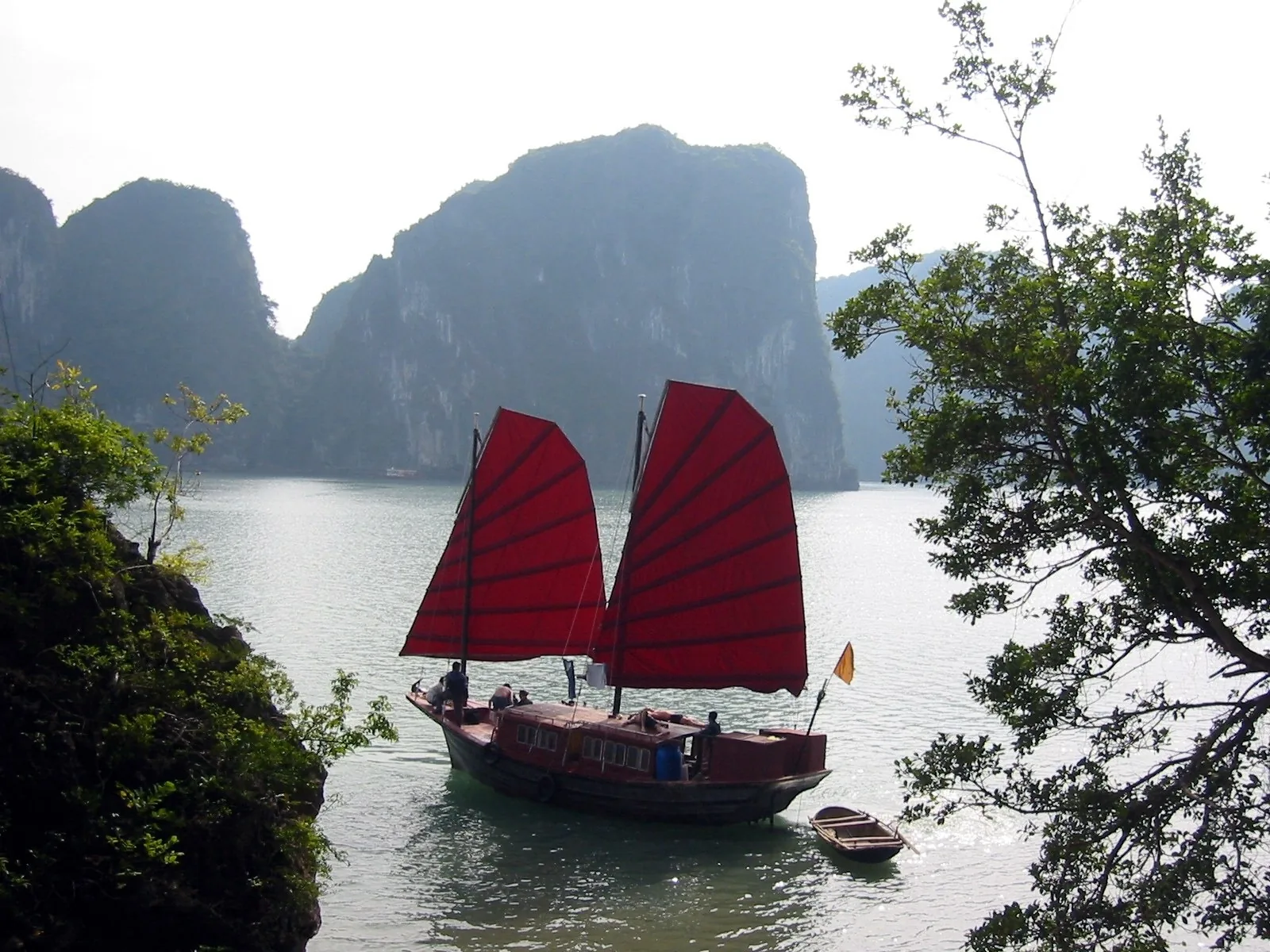
Vietnam at a glance
Vietnam works for Indian clients on value and variety together. Direct and one-stop connections into Hanoi and Ho Chi Minh City keep flight time reasonable, hotel and dining costs stay competitive against Thailand, and the country covers cultural sightseeing, a UNESCO-listed bay cruise, hill-station trekking and beach time without ever leaving its borders. It is also becoming a genuine corporate destination out of India — Ha Long Bay and Da Nang in particular are being booked increasingly as MICE and incentive-travel venues rather than only leisure stops.
Because Vietnam stretches nearly 1,650 km north to south, weather has to be read by region rather than as one national season. The north (Hanoi, Sa Pa, Ha Long) is hot and humid from May to October and cooler and dry from November to April, with December-January turning genuinely cold in the far north and in Sa Pa. Central Vietnam (Da Nang, Hue, Hoi An, Nha Trang, Da Lat) runs hot and dry from January to August, with heavier rain in September to November. The south (Ho Chi Minh City, Mui Ne, Phu Quoc) is dry and hot from November to April and warm and wet from May to October, with the heaviest rain in June to August — so October to April is the safest general window if a client is combining all three regions.
This regional spread means Vietnam suits a wide client base: honeymooners drawn to Ha Long Bay and Da Lat, beach travellers heading to Phu Quoc or Nha Trang, trekking and hill-tribe enthusiasts booking Sa Pa, and corporate groups running incentive programs out of Da Nang or Ha Long Bay. Hanoi is the capital and northern gateway, the Vietnamese Dong (VND) is the local currency — worth flagging to clients that the smallest common note starts at 1,000 VND, since the extra zeros can confuse first-time visitors — and Vietnamese is the everyday language, with English spoken by guides and hotel staff in tourist areas rather than universally.
Where to go
Practical information
| Details | |
|---|---|
| Best time to travel | October to April overall; north is cool/dry Nov-Apr, centre is drier Jan-Aug, south is dry Nov-Apr |
| Currency | Vietnamese Dong (VND) — smallest common note is 1,000 VND |
| Language | Vietnamese; English spoken in tourist areas |
| Main gateways | Hanoi (Noi Bai), Ho Chi Minh City (Tan Son Nhat), Da Nang International Airport |
Our packages
Our Vietnam range covers a 4D/3N Hanoi city break at one end and a 25D/24N grand circuit through Hanoi, Ha Long Bay, Sa Pa, Hue, Da Nang and beyond at the other, with most agents booking somewhere in the 6-10 night range combining two or three of these regions. Ha Long Bay overnight cruises and a Hanoi-Sa Pa hill-station add-on are our two most requested single upgrades to a standard itinerary.
Beach extensions to Phu Quoc, Nha Trang or Mui Ne, and honeymoon-specific pacing through Da Lat, are available on any base itinerary. Share your client's dates, city pairing and group size and we will return a day-by-day plan with hotel options.
Working with us on the ground
Our Vietnam operations run out of a dedicated office in Hanoi, which keeps hotel confirmations, guide bookings and mid-trip changes handled locally rather than relayed through a third party. For agents, that means faster turnaround on itinerary requests and a direct escalation point if anything needs adjusting once a group is already on the ground.