
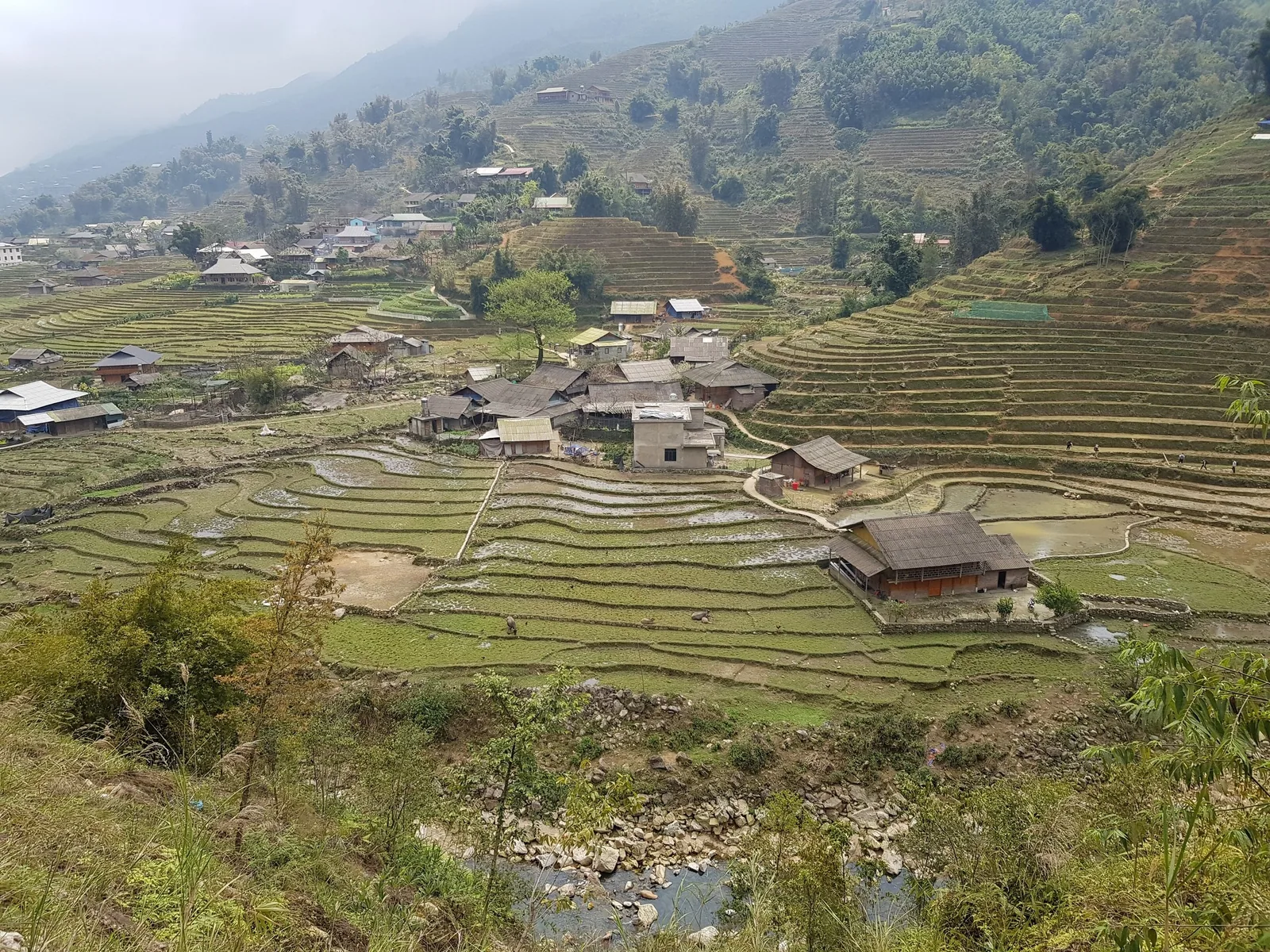
Sa Pa at a glance
Sa Pa is a hill town in Lao Cai province, in Vietnam's far north near the Chinese border, built by the French in the early 1900s as a mountain retreat from the Hanoi heat. It sits above the Muong Hoa Valley, where centuries-old rice terraces climb the hillsides and are still farmed by hand today.
Fansipan, at 3,143 metres, is the highest peak in Indochina and is nicknamed the 'Roof of Indochina'. A cable car now reaches close to the summit, which means the peak is accessible to clients who would not otherwise attempt the multi-day trek, alongside the traditional walking routes through H'mong, Dao, Tay and Giay ethnic minority villages that most groups still come for.
Sa Pa is reached from Hanoi by road, about 5-6 hours, or by overnight train to Lao Cai followed by a shorter road transfer — no domestic flight is involved. That makes travel time worth flagging clearly when quoting, since it is the longest overland leg in most northern Vietnam itineraries.
Top experiences
Fansipan cable car
A cable car ride toward the summit of Vietnam's highest peak, with a return trip possible within a few hours.
Muong Hoa Valley trek
Walking trails through terraced rice fields and hill-tribe villages, guided by local operators.
Ethnic minority villages
Visits to H'mong, Dao, Tay and Giay communities, often combined with homestay options.
Sa Pa Night Market
Local food, textiles and a weekend 'love market' tradition among hill-tribe communities.
Silver Waterfall & Love Waterfall
Two accessible waterfall stops on the road toward the Tram Ton Pass.
Cat Cat Village
A H'mong village a short walk from the town centre, one of the easiest cultural stops for time-limited groups.
Practical information
| Best time to visit | March-May and September-November (clear skies; September-October has the best golden rice terraces); December-February is cold with occasional frost |
| Getting there | About 5-6 hours by road from Hanoi, or overnight train to Lao Cai plus a short road transfer |
| Getting around | Walking, local guides for treks, cable car to Fansipan |
| Elevation | Sa Pa town at roughly 1,500m; Fansipan summit at 3,143m |
| Currency | Vietnamese Dong (VND) |
Our packages featuring Sa Pa
Every Sa Pa itinerary can be resequenced with Hanoi and Ha Long Bay, or built into a longer north-to-south program — share your client's dates and group size and we will return a day-by-day plan with hotel options.